


 Arabic
Find the Best Ontario Cannabis Dispensaries for Premium Quality
Looking for a simple, friendly spot to buy legal cannabis? Ontario Cannabis Dispensaries offers a straightforward way to browse and purchase a curated selection of dried flower, edibles, and oils, either online for delivery or in person at their welcoming stores. With knowledgeable staff ready to help you find the perfect product for your needs, this is a trusted and convenient local resource for anyone exploring cannabis in Ontario.
Navigating the Legal Market: Where to Buy Weed in Ontario
Navigating the legal market for cannabis in Ontario requires choosing between Ontario Cannabis Store (OCS) for online delivery or visiting a licensed ontario cannabis dispensary in person. For immediate access, physical dispensaries offer same-day purchases and product inspection before buying. Use the OCS store locator to verify a location is provincially authorized, as unlicensed shops carry risks. When inside, budtenders can explain potency and effects, though prices are fixed across all legal outlets. Bring valid government ID as zero exceptions are made for age verification. Prioritize stores with clear product labeling and receipt-provided purchases to guarantee compliance and quality.
Licensed Retail Stores vs. Online Government Portal
Choosing between a licensed retail store and the Ontario Cannabis Store (OCS) online portal hinges on convenience versus immediacy. In-store shopping allows you to inspect products, ask budtenders questions, and leave with your purchase instantly. Conversely, the OCS website offers discreet delivery to your doorstep but requires planning around shipping times. Retail stores provide hands-on selection, while the online portal ensures consistent stock and access to exclusive online product listings not always found on shelves. Your choice ultimately depends on whether you value speed or the breadth of digital inventory.
Licensed retail stores offer immediate, tactile purchasing; the online government portal provides broader selection with delivery delays.
City-by-City Guide: Hotspots for Purchasing in Toronto, Ottawa, and Hamilton
For your Ontario weed run, Toronto’s hotspots are scattered from Queen West’s sleek boutiques to Kensington Market’s laid-back lounges. Hit up any top-rated dispensary Toronto listed near Spadina for curated flower and edibles. In Ottawa, ByWard Market and Elgin Street house friendly shops with fast service and local craft strains. Hamilton’s scene thrives along James Street North and Hess Village, offering budget-friendly options and cozy vape bars. For a smooth crawl:
- Start in Toronto’s downtown core for variety.
- Next, head to Ottawa’s market district for staff picks.
- Finish in Hamilton’s artsy strip for deals and community vibe.
Understanding Delivery Services and Same-Day Options
Understanding delivery services is essential for navigating Ontario’s legal dispensaries. Many licensed retailers offer same-day cannabis delivery, which typically requires an order placed before a cut-off time—often between 2:00 PM and 4:00 PM—to guarantee arrival that evening. The process follows a clear sequence:
- Verify the dispensary’s delivery zone on its website.
- Select products and proceed to checkout, providing valid government ID.
- Complete payment online via debit or credit.
- Receive a real-time tracking link and confirm age verification upon arrival.
Same-day options depend on local inventory and driver availability, so confirming stock before ordering avoids delays.
Decoding the Rules: What Shoppers Need to Know
When decoding the rules at Ontario cannabis dispensaries, the first thing to know is that you must show valid government ID proving you are 19 or older at the door—no exceptions. Keep your purchase under the public possession limit of 30 grams, or you risk a fine. Inside the shop, you cannot open or smell any product before buying; all packages are sealed. You are allowed to pay with debit but never with credit cards. If ordering online for pickup or delivery, remember that the store is legally required to verify your age again upon arrival. Stick to these points, and your shopping trip stays simple and stress-free.
Age Verification and ID Requirements at Point of Sale
Before any transaction, every Ontario cannabis dispensary enforces a strict age verification and ID check at the point of sale. You must present a valid, government-issued photo ID—such as a driver’s licence, passport, or Ontario photo card—proving you are 19 or older. The clerk will scan or visually confirm the expiry date and birth date; expired IDs are universally rejected. If your ID is damaged or illegible, the sale will be refused. Be prepared to remove any face covering for a visual comparison to your photo, as this is a non-negotiable step to complete your purchase.
Purchase Limits and Possession Caps Explained

In Ontario cannabis dispensaries, purchase limits cap the amount a shopper can buy in a single transaction at 30 grams of dried flower (or equivalent in other forms), while possession caps restrict what you can legally carry in public to that same 30-gram threshold. These are separate but linked rules: exceeding the purchase cap at checkout is prevented by the dispensary system, but responsibly managing your total home stockpile (which has no limit under federal law) requires tracking cumulative purchases. Understanding the 30-gram purchasing boundary is crucial for avoiding denial of sale.
Q: Can I buy from multiple dispensaries in one day to get more than 30 grams?
A: Yes, legally you can visit multiple stores, but you must ensure your total public possession never exceeds 30 grams at any given time; dispensaries cannot sell to you if you are visibly carrying already-purchased cannabis over that cap.
Consumption Laws: Where You Can and Cannot Light Up
After purchasing from Ontario cannabis dispensaries, you must understand legal consumption zones to avoid fines. Use is prohibited in all public places, including parks, sidewalks, and vehicles. Smoking or vaping is banned within nine metres of hospital entrances and on restaurant patios. If you live in multi-unit housing, check your lease—landlords can restrict cannabis use entirely, even on balconies. To stay compliant, follow this sequence:
- Confirm you are on private property where the owner permits consumption.
- Ensure no minors or school zones are nearby.
- Verify you are not in a smoke-free designated area.
Inside the Store Experience: What to Expect
Upon entering an Ontario cannabis dispensary, you will first present valid government ID to a receptionist in a secured vestibule. Inside, a clean, well-lit retail floor presents products in glass display cases, with clearly labeled pricing and THC/CBD content visible for every item. A dedicated budtender will guide you through strains or formats, from dried flower to vapes and oils, based on your desired effect. You can smell select products in sealed jars and ask for personal recommendations. Expect a calm, controlled environment where transactions are quick via debit or cash. This personalized consultation often feels more like a specialized boutique than a standard store. You leave with your purchase sealed in an opaque bag, no questions asked.
Atmosphere and Design: From Boutique Shops to High-Volume Stores
In Ontario dispensaries, the atmosphere and design spectrum directly dictates your shopping flow. Boutique shops use curated lighting and minimal shelving to create a calm, gallery-like pace, where you can examine individual jars. Conversely, high-volume stores rely on bright, uniform layouts with standardized display cases to process customer traffic efficiently. The shift from soft textures and quiet corners in small shops to hard surfaces and wide aisles in large retailers isn’t arbitrary—it’s a logical response to serving different transaction volumes while managing spatial psychology for comfort or speed.
Budtender Knowledge: How Staff Guide Your Selection
A knowledgeable budtender transforms your visit from guesswork into a guided discovery. They leverage deep product understanding to ask about your desired effects, experience level, and consumption method—matching you with specific strains or formats that fit. This expert product matching goes beyond THC percentage, covering terpene profiles and onset times. Q: How do I get the best guidance from a budtender? A: Be honest about your tolerance and goals; a skilled budtender uses that info to shortcut straight to your ideal selection.
Self-Service Displays vs. Counter-Only Models
In Ontario cannabis dispensaries, the shopping experience divides sharply between interactive self-service displays and traditional counter-only models. With self-service, you browse sealed product samples behind glass, scan QR codes for lab data and terpene profiles, then grab your own bag from a shelf. Counter-only stores require you to order verbally from a menu while a budtender fetches selections. The self-service route lets you pace your exploration, compare strains by smell via sealed jars, and handle packaging before purchase. Counter-only feels faster if you know exactly what you want, but limits product discovery. Most dispensaries now blend both—self-service for browsing, counter for checkout and personalized recommendations.
Product Spotlight: Beyond Flower and Pre-Rolls
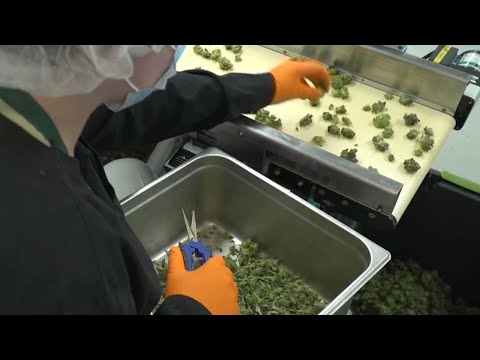
When you walk into an Ontario cannabis dispensary, the Product Spotlight on Beyond Flower and Pre-Rolls transforms your selection experience. Instead of standard offerings, this curated display highlights unique, potent strains and artisan pre-rolls with infused kief or hash that deliver a more intense, flavorful session. Budtenders guide you directly to these featured items, often single-batch small-batch flower with distinct terpene profiles you won’t find in bulk jars. The pre-rolls in this spotlight use whole-flower grounds, not trim, for a smoother, consistent burn. For a quick, elevated buy at any Ontario dispensary, this Beyond Flower and Pre-Rolls focus cuts through the noise, giving you boutique quality without any guesswork.
Concentrates, Vapes, and Dabs: High-THC Offerings
For those seeking potent effects, Ontario dispensaries stock a robust selection of high-THC offerings beyond flower. High-potency concentrates like shatter and wax deliver massive vapor hits via dab rigs, while vape carts offer discreet, pre-filled convenience with pure distillate. Dabs, ranging from live resin to sauce, preserve intense flavor profiles alongside the punch.
Q: Are dabs safe for new users? A: Not really—start with a vape pen (around 80% THC) before trying dabs, which often exceed 90% THC and require careful temperature control.
Edibles and Beverages: What’s Legally Available
Ontario dispensaries offer a curated range of legally available edibles and beverages designed for discretion and precise dosing. These products include gummies, chocolates, baked goods, and infused teas or sodas, each with a strict 10mg THC limit per package. You can select from various formulations, such as balanced CBD-to-THC ratios or purely relaxing indica blends. This clarity ensures a predictable experience without the guesswork of homemade options.
- Gummies and chews in fruit flavors, often with hybrid or sativa effects
- Chocolate bars and baked goods, typically in 2.5mg or 5mg THC segments
- Non-alcoholic cannabis beverages like sparkling water or iced tea
Topicals, Tinctures, and Capsules for Medical Users
For medical users in Ontario dispensaries, targeted symptom management is achievable through precise dosing formats. Topicals, such as creams and balms, deliver cannabinoids locally without psychoactive effects, ideal for localized pain or inflammation. Tinctures offer sublingual absorption, allowing patients to titrate doses by adjusting the dropper volume for consistent relief from anxiety or nausea. Capsules provide standardized, pre-measured servings, suitable for daily routines where predictable systemic effects are needed. The logical use sequence involves first identifying the symptom (e.g., joint pain), selecting the format (topical for direct application, tincture for fast onset, capsule for oral metabolism), then adjusting the dosage based on response.
Comparing Prices: Value, Premium, and Bulk Buys

In the aisles of an Ontario dispensary, I learned to read price tags like a map. The value options, often house-brand ounces under $100, become my reliable weekday stash—functional for rolling after work. But for a milestone birthday, I bypass those shelves entirely. I scan the premium buys locked behind glass: small-batch craft quads at $50 an eighth, where the terpene profile is lab-charted on the jar. On payday, I commit to a bulk buy—a half-ounce of a mid-tier AAA strain—saving $40 compared to buying eighth by eighth. Each choice answers a different need: value for volume, premium for experience, bulk for the sweet spot between cost and quality.
Budget-Friendly Strains vs. Craft Cannabis
When navigating Ontario dispensaries, the choice between budget-friendly strains and craft cannabis comes down to priorities. Budget options, often from high-volume producers, deliver reliable effects and solid flavor for daily use at a fraction of the cost. In contrast, craft cannabis commands a premium through meticulous curing, unique terpene profiles, and small-batch cultivation. For most users, affordable daily drivers from budget lines satisfy without breaking the bank, while craft picks shine for special occasions or connoisseur moments. You get what you pay for: budget saves money upfront; craft maximizes depth and experience.
- Budget strains offer consistent potency and effects for regular consumption at lower price points.
- Craft cannabis provides enhanced aroma, flavor, and smoothness due to small-batch, hand-trimmed production.
- Choosing budget allows larger quantities for the same spend versus craft’s smaller, pricier packages.
Seasonal Promotions and Loyalty Programs
In Ontario cannabis dispensaries, seasonal loyalty incentives directly reduce per-gram costs on premium and bulk buys. For example, 4/20 sales often offer 20% off select value tiers, while Boxing Day promotions apply tiered discounts to high-volume purchases. Store-specific points programs accumulate at one point per dollar spent, redeemable exclusively for seasonal product drops. Many dispensaries also grant loyalty members early access to holiday bundles, preventing stockouts on limited-strain bulk buys.
Price Differences Between Chains and Independents
Chain dispensaries often use bulk purchasing power to set aggressive everyday price tiers on popular flower and pre-rolls, while independents may undercut these on niche craft strains or older stock seeking clearance. Indie shops frequently negotiate single-source deals, leading to occasional steep discounts on single SKUs that chains rarely match. Conversely, chains consistently offer low margins on house-brand ounces and high-volume vape carts. For savvy shoppers, comparing sticker prices yields clear savings: independents win on isolated flash deals; chains dominate predictable, volume-driven lows. A quick scan for price-per-gram reveals the sharper edge.
| Price Aspect | Chain Dispensaries | Independent Dispensaries |
|---|---|---|
| Bulk flower ounces | Lower everyday base price | Higher base, occasional deep-clearance |
| Niche/craft eighths | Standard markup | Can beat chain by 10-20% |
| House-brand vape carts | Consistently cheapest | Rarely match chain floor price |
| Flash sales | Rare, predictable | Frequent, unpredictable |
Local Favorites: Community-Driven Dispensaries
In Kitchener’s core, local favorites like *High Tides* thrive by stocking small-batch Ontario growers alongside craft edibles from Waterloo’s own chefs. The owner, Jen, remembers your name and which sour diesel batch helps your chronic pain best. She actually keeps a handwritten “community wishlist” behind the counter, ordering strains specifically requested by regulars. When a new GTA craft cultivar hits the humidor, she texts her loyalty list before posting online. Over in Kingston, *The 613 Cannabis Co-op* lets members vote on seasonal flower drops, ensuring the shelves reflect local taste instead of corporate quotas. These community-driven dispensaries transform a simple purchase into a neighbourhood exchange—your morning commute chat might even reveal that the budtender grew up two blocks away.
Indigenous-Owned and First-Nation Licensed Shops
Community-driven dispensaries in Ontario include Indigenous-owned and First-Nation licensed shops, which often operate under distinct sovereignty frameworks. These storefronts, located both on reserve lands and in urban centres, may carry products sourced from Indigenous cultivators, including legacy strains and traditional preparations. Budtenders in these shops frequently offer knowledge about local growing practices and plant history. Many locations prioritize community reinvestment, directing profits toward language programs or health services. Product selection can differ from provincial retailers, with a focus on handcrafted offerings.
- Look for shops that display a community license or tribal council certification
- Inventory often features exclusive partnerships with Indigenous craft growers
- Staff are typically trained to explain cultural significance behind specific strains
Small-Batch Producers and Farm Gate Sales
For Ontario dispensaries prioritizing local character, small-batch producer partnerships are a core differentiator. These growers cultivate limited quantities, often in craft facilities, focusing on specific phenotypes and soil health, yielding terpene profiles unavailable from mass producers. Farm gate sales allow direct purchase at the cultivation site, bypassing retail markups and ensuring peak freshness. When shopping, ask budtenders for a specific farm’s harvest date or batch number; small-batch inventory moves quickly, so availability directly reflects seasonal production cycles. This proximity to the source provides an unmatched understanding of the plant’s cure and lineage.
Pop-Ups and Events in the Local Cannabis Scene
Beyond the storefront, community-driven dispensaries in Ontario energize the local cannabis scene through curated pop-ups and events. These gatherings often feature crash courses by growers or artisans, letting you sample rare strains or meet the maker before a product hits the shelf. Seasonal cannabis events, like harvest festivals or infused cooking demos, transform a routine pickup into a social experience. Local events frequently spotlight nearby craft cultivators you won’t find on major retail shelves. Check a dispensary’s chalkboard or social feed for weekly workshops on rolling techniques or terpene tastings, which connect you directly with the culture behind your purchase.
Online Ordering: Click, Pickup, or Delivery
When you need Ontario weed, online ordering lets you browse the menu, click what you want, and choose between store pickup or direct delivery. For pickup, you’ll get a confirmation text and can usually grab your order within an hour from the dispensary’s front counter. Delivery is ideal if you’re relaxing at home, but always double-check the delivery window—it can shift on busy weekends. Many dispensaries offer free delivery if you spend over a certain amount, so it pays to stock up. Pickup is often faster than you expect, especially during peak hours when drivers are stretched thin. Just remember that same-day delivery isn’t guaranteed in every neighbourhood, so plan ahead if you’re cutting it close.
User Experience on Provincial and Third-Party Sites
Navigating Ontario’s cannabis shopping landscape means choosing between government-run platforms and third-party aggregators. The provincial OCS site offers a streamlined, no-nonsense experience with consistent inventory, but its rigid categorization can feel slow for browsing. Third-party sites often provide more dynamic filters, like strain effects or flavor profiles, and sometimes faster checkout flows. A key difference lies in order tracking: provincial systems update predictably, while third-party apps might offer real-time driver maps. For a smoother pickup, prioritize sites with live inventory status. To maximize ease, follow this sequence:
- Compare load times on both platforms.
- Check if your preferred payment method is listed.
- Look for real-time store inventory sync.
- Review the returns policy before committing.

Minimum Orders, Fees, and Delivery Windows
Navigating Ontario cannabis dispensaries online means understanding their **minimum order policies, delivery fees, and time windows**. Most dispensaries require a $30–$50 minimum purchase to unlock delivery, while premium or express services often trigger additional fees. To avoid surprises, follow this sequence:
- Check the minimum order threshold to ensure your cart qualifies for free or standard delivery.
- Review fee structures—some dispensaries waive charges for orders over $80, while others apply a flat $10–$15 rate for same-day slots.
- Select your delivery window at checkout, typically 1–3 hour blocks for next-day or 30-minute increments for express options.
Always confirm that your selected timeframe aligns with the dispensary’s cutoff times to avoid fees from rescheduling.
Order Tracking and Contactless Pickup
Real-time updates push directly to your phone, showing exactly when your order is packed and ready for contactless cannabis pickup. You simply park in a designated spot, tap the confirmation in the app, and a staff member places your sealed bag into your trunk or through a secure locker—no signatures, no face-to-face. The system even alerts you if there’s a minor delay, ensuring you never wait blindly. Q: How do I confirm my pickup without entering the store? A: When you arrive, open the order page in your account—your unique QR code or order number triggers the automated release of your products through a contactless bay.
Navigating Quality: Lab Testing and Labels
When navigating quality at Ontario cannabis dispensaries, scrutinize the mandatory Health Canada-issued excise stamp and the product’s lot number. The label must list exact cannabinoid percentages from a licensed lab. A key question is: Does the label show terpene profiles and residual solvent results? If not, request a Certificate of Analysis (COA) from the budtender. This document verifies potency claims and confirms the absence of pesticides or mold, directly informing your product choice.
What the THC and CBD Percentages Really Mean
In Ontario dispensaries, THC and CBD percentages represent the mass of each cannabinoid relative to the total dried flower or extract weight, not a measure of potency quality. A 25% THC label means 250 milligrams per gram, which influences psychoactive intensity, while CBD percentages, like 10%, indicate therapeutic potential without intoxication. These figures guide dosage precision, not absolute efficacy; a high THC number does not guarantee a better experience, as terpene profiles and personal tolerance mediate the actual effect. Always compare percentages to match your desired outcome, not as an objective ranking.
THC and CBD percentages on Ontario labels are precise weight-based ratios that predict experiential intensity, not product superiority.
Terpene Profiles: Why Smell and Flavor Matter
When evaluating cannabis in Ontario dispensaries, terpene profiles directly determine the sensory experience beyond THC percentage. Aromas like limonene or myrcene signal effects; citrus scents often correlate with uplifting moods, while earthy notes suggest relaxation. Reading terpene data on labels helps you predict flavor and therapeutic nuance. Q: Why should I prioritize terpene profiles over potency? A: Terpenes modulate the high and offer tailored relief, such as pinene’s focus-enhancing properties versus linalool’s calming effects. Smelling sealed jars or reviewing lab reports listing dominant terpenes ensures you select a strain aligned with your desired outcome.

Expiration Dates and Proper Storage Tips
When buying from Ontario cannabis dispensaries, always check the packaging date and best-before window to ensure peak cannabinoid potency and terpene freshness. Store your products in a cool, dark place between 15–21°C, away from sunlight and moisture, which degrade THC into less effective CBN. Use airtight glass jars rather than original plastic bags to prevent oxidation, and keep flower from freezing in winter delivery or trunk storage. Proper sealing and humidity packs (58–62% RH) extend shelf life up to a year for concentrates, while edibles and oils degrade faster—respect expiry dates religiously to avoid rancid effects or reduced efficacy.
Expiration dates guarantee lab-tested potency, but proper storage—cool, dark, airtight—preserves quality long after the package is opened.
Specialty Services: Medical Access and Private Clinics
Many Ontario cannabis dispensaries now help you sign up for medical access directly. Private clinics inside or partnered with these shops offer quick health assessments, often with lower wait times than public healthcare. A medical document can unlock higher purchase limits and access to special strains not available on the recreational shelf. Dispensary staff can guide you through submitting your medical form to Health Canada, making the process feel much less intimidating. Just keep in mind that a medical card from a private clinic may limit you to that specific dispensary group’s product selection. This setup is practical if you want more personalized care and consistent access to your preferred medicine.
Registering for ACMPR and Doctor Consultations
For patients seeking direct access to Ontario cannabis dispensaries, registering for ACMPR begins with a dedicated doctor consultation exploring your medical history and condition-specific cannabis needs. A licensed healthcare provider evaluates you to authorize a medical document, which you then use to register with a federally licensed seller or a private clinic that processes your ACMPR application. This consultation often covers dosage forms, personalized strain recommendations, and how ACMPR doctor consultations legally enable you to purchase higher-potency products and larger quantities than retail stores offer. The medical document you receive is essential for placing orders at affiliated dispensaries.
Registering for ACMPR requires a targeted doctor consultation to Buy cannabis obtain a medical document, which then grants you legal access to specialty dispensary products and higher purchase limits in Ontario.
Private Dispensaries vs. AGCO-Regulated Stores
Choosing between private dispensaries and AGCO-regulated stores in Ontario involves a practical trade-off. Private dispensaries often offer more personalized attention and a curated selection of niche products, while AGCO stores guarantee strict product testing and transparent sourcing. Product provenance verification is straightforward at AGCO outlets, but private shops may provide deeper strain knowledge. A logical sequence for comparison includes:
- Evaluate product origin and testing labels.
- Assess staff expertise on terpenes and effects.
- Compare pricing for identical SKUs across both types.
The convenience of private delivery services does not replace the standardized compliance found in regulated storefronts.
Compassionate Pricing and Discounts for Patients
Many Ontario dispensaries offer compassionate pricing programs for patients holding a medical document, typically providing a 10–30% discount off retail prices. Eligibility often requires proof of diagnosis and enrollment directly through the clinic or store. Some private clinics extend these reduced rates exclusively to low-income or disability benefits recipients, making consistency across locations difficult. Patients must proactively ask about sliding-scale fees or bulk-buy savings for flower and oils, as these are rarely advertised. Verification of medical status is usually required at each visit, with renewals needed annually to maintain access.
Future Trends: Innovation and Regulation Shifts
As future trends reshape Ontario cannabis dispensaries, expect innovation in personalized retail to shift how you discover products, with AI-driven recommendations and localized strain curation becoming standard. Concurrently, regulation shifts will demand that dispensaries integrate robust age-verification and product-tracking technologies directly into your shopping experience, ensuring compliance without disrupting service. Look for seamless click-and-collect models that sync with updated municipal rules, allowing you to pre-order and bypass in-store wait times legally. These practical adaptations will prioritize convenience and trust, directly affecting your transaction speed and product selection without introducing bureaucratic friction.
Micro-Licenses and Artisanal Producers Entering the Market
Micro-licenses enable small-scale artisanal producers to supply Ontario dispensaries with distinct, hand-crafted strains, focusing on terpene-rich profiles and small-batch curing methods. These producers prioritize organic soil cultivation and precise drying techniques, resulting in a flavor depth often absent in mass-market products. Dispensaries can therefore offer micro-cultivated craft cannabis directly from local growers, with detailed provenance tags on flower jars explaining the specific harvest date and curing duration. The limited supply means these products rotate frequently, giving regular customers a fresh discovery with each restock.
Micro-licenses empower artisanal producers to deliver small-batch, terpene-focused cannabis, giving Ontario dispensaries a rotating inventory of precisely cured, locally grown flower with transparent growing details.
Potential for Cannabis Lounges and Tasting Bars
For Ontario dispensary customers, cannabis lounges and tasting bars offer a practical way to evaluate products before purchase. Visitors could sample different strains through vaporizers, assessing flavor and effects in a social setting. These consumption spaces eliminate the guesswork of buying an unfamiliar product, allowing users to choose based on direct experience. Such venues also provide a controlled environment to learn proper dosage from budtenders, reducing the risk of overconsumption at home. This shift empowers consumers to make informed decisions by experiencing cannabis firsthand, transforming a dispensary visit into an interactive, education-focused outing.
Cannabis lounges and tasting bars let Ontario consumers sample and evaluate strains on-site, removing purchase uncertainty and enabling educated product selection through guided, social use.
Changes in Packaging Rules and Advertising Restrictions
Future packaging rules in Ontario dispensaries will likely shift toward simpler, more eco-friendly designs, moving away from flashy branding. You might see plain containers with just basic product info, similar to old cigarette packaging. Advertising restrictions are also tightening, so don’t expect to see online ads or billboards for specific strains. Instead, shops will focus on in-store education and word-of-mouth. Child-resistant packaging will remain a priority, but expect more recyclable options. Q: Will plain packaging make it harder to find my favorite product? A: Maybe at first, but you’ll soon rely on lab-tested details like THC percentage and terpene profile rather than shiny logos.